A gutter system can look simple from the ground, but it does a major job: moving thousands of gallons of rainwater away from your roof, siding, foundation, and landscaping. Gutter installation cost depends on more than the length of your roofline. Material, home height, drainage design, existing damage, and access all affect the final price.
For Northern Virginia homeowners, a well-planned gutter project is not just a curb-appeal upgrade. It is protection against heavy rain, snowmelt, soil erosion, basement moisture, stained siding, and rot around the roof edge. The right estimate should make clear what is being installed, why it is needed, and where your investment is going.
Typical Gutter Installation Cost in Northern Virginia
Most homeowners can expect a full gutter replacement to fall somewhere between $1,500 and $3,500 for a typical single-family home. Smaller, straightforward homes may cost less, while larger homes with multiple roof levels, difficult access, specialty materials, or extensive wood repairs can cost considerably more.
Pricing is commonly based on linear feet. A contractor measures the roof edges that need gutters, then accounts for downspouts, corners, end caps, hangers, outlets, removal of old materials, and installation conditions. A 2,000-square-foot house does not automatically need the same amount of gutter as another house of the same size. The roof shape matters far more than the home’s square footage.
As a general planning range, professionally installed seamless aluminum gutters often run about $10 to $18 per linear foot. Premium steel systems may range higher, while copper is a specialty option with a substantially larger upfront cost. These are planning figures, not a substitute for a site-specific estimate. Your home’s layout and condition determine the real scope of work.
What Has the Biggest Effect on Gutter Installation Cost?
The material you choose is one of the clearest cost drivers. Aluminum is the most common choice for Virginia homes because it is lightweight, rust-resistant, available in many colors, and well suited to seamless fabrication. It offers a strong balance of durability and value for most homeowners.
Vinyl gutters usually carry a lower initial price, but they can become brittle over time and may not perform as well through temperature swings or under heavy water loads. Steel is stronger but can require more maintenance if its protective finish becomes damaged. Copper has a distinctive appearance and long service life, but it is generally selected for historic homes or high-end exterior projects because of its price.
Home height and roof complexity also matter. A one-story ranch home with a simple roofline is generally faster and safer to complete than a two-story home with steep slopes, dormers, covered entries, and several intersecting roof sections. More corners and separate roof planes require more custom fitting and more places where water flow must be managed correctly.
Access can change the scope as well. Tight side yards, landscaping around the home, decks, screened porches, and power lines may require extra care during installation. A professional crew plans for safe access and protects the property, but unusual conditions can add labor.
Gutter Size and Drainage Design
Many homes use 5-inch K-style gutters, which work well for ordinary roof areas. However, 6-inch gutters may be the smarter choice when a roof has large drainage areas, steep slopes, long runs, or valleys that concentrate water in one location. The larger system costs more, but it can reduce overflow during hard rain.
Downspouts are just as important as the gutters themselves. A system needs enough downspouts, placed in the right locations, to carry water away efficiently. Installing new gutters without correcting undersized or poorly located downspouts can leave homeowners with the same overflow problem they had before.
Extensions or underground drainage connections may also be necessary to direct water away from the foundation. This is especially valuable on lots where water tends to collect near the home, but the best solution depends on grading, landscaping, and local drainage conditions.
Costs That May Appear in a Detailed Estimate
An honest estimate should account for the complete job, not simply a per-foot gutter price. Some costs are optional upgrades, while others are necessary because of what is found at the roof edge.
Old gutter removal and disposal may be included or listed separately. If existing gutters are pulling away, the crew may also find damaged fascia boards, soffit areas, or trim behind them. Replacing soft or rotted wood before new gutters are installed is the right long-term repair. Covering damaged wood with a new gutter may look acceptable at first, but it does not solve the moisture problem.
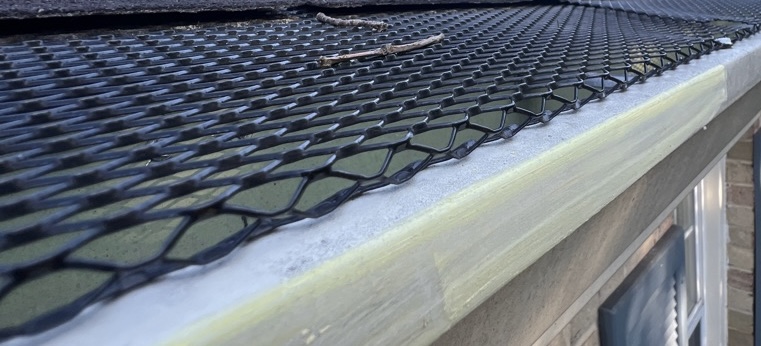
Gutter guards are another common add-on. They can reduce the amount of debris that enters the system, particularly around mature trees, but no guard eliminates maintenance entirely. The best guard for one home may not be right for another. Fine debris, pine needles, roof pitch, and the type of surrounding trees all affect performance.
Color-matched downspouts, oversized gutters, rain chains, decorative conductor heads, and underground drain connections can also affect the project total. These features can be worthwhile when they solve a specific drainage issue or fit the home’s exterior design. They should not be added simply because they sound like an upgrade.
When Repair Makes More Sense Than Replacement
Not every gutter problem requires a full replacement. A loose section, leaking seam, missing hanger, or damaged downspout can often be repaired if the rest of the system is in sound condition. Cleaning and resealing may be a practical short-term solution for a newer system with isolated issues.
Replacement becomes more sensible when gutters are repeatedly overflowing, sagging, pulling away from the fascia, developing frequent leaks, or showing widespread corrosion or cracking. If water is getting behind the gutters and damaging trim, waiting can turn a drainage project into a larger exterior repair.
Homeowners should also consider the timing of related work. If you are replacing a roof, repairing fascia, installing new siding, or updating trim, coordinating gutter work can prevent duplicated labor and help create a cleaner finished result. Gutters should be installed to work with the roof edge and exterior details, not treated as an afterthought.
How to Compare Gutter Estimates Fairly
The lowest number on paper is not always the lower-cost project over time. When comparing estimates, make sure each contractor is pricing a similar system. One proposal may cover only basic gutters, while another includes removal, fascia repair, larger downspouts, proper extensions, and cleanup.
Ask whether the gutters are seamless or sectional, what material and thickness are being used, how hangers will be spaced, and how many downspouts are included. It is also reasonable to ask how the contractor will address water flow at valleys and near entryways. Clear answers show that the estimate is based on your home rather than a generic price sheet.
Workmanship matters because gutters must be pitched correctly, securely fastened, and sealed where needed. A system that is installed level when it should have a subtle slope can hold standing water. Gutters installed with insufficient support can sag under debris, snow, and rainwater. Those shortcuts may not be visible on installation day, but they can lead to early problems.
Planning Your Project With Confidence
Before requesting an estimate, take note of where you see overflow, damp soil, peeling paint, staining, or water near the foundation. If a particular corner of the home gets hit hardest during storms, mention it. These details help identify whether the issue is the gutter itself, a missing downspout, roof runoff, or grading around the property.
A quality contractor should inspect the full drainage path, explain the options in plain language, and provide pricing that is easy to understand. At Fitco LLC, that means looking beyond the gutter line to help homeowners protect the exterior features that water can quietly damage over time.
The best gutter system is not necessarily the most expensive one. It is the system sized for your roof, installed with care, and designed to move water safely away from the home when Northern Virginia weather puts it to work.