A gutter that spills over during a Virginia downpour is more than an annoyance. The most common gutter overflow heavy rain causes can send water behind siding, into roof edges, across walkways, and down beside the foundation. A brief overflow once during an exceptional storm may not mean the system has failed. Repeated overflow, however, deserves attention before small drainage problems turn into costly exterior repairs.
Gutter Overflow Heavy Rain Causes at a Glance
Rain gutters work as a system. Water leaves the roof, enters the trough, travels toward the downspouts, and discharges far enough from the house to drain safely. If any point in that path is restricted, undersized, damaged, or installed at the wrong angle, water can spill over the front or back of the gutter.
Heavy rain often exposes a weakness that was already there. A gutter may look fine from the ground on a clear day, then overflow when a fast-moving summer storm drops water faster than the system can handle it. The goal is not simply to stop the visible spill. It is to identify where the water is being held up and correct the underlying issue.
Leaves, pine needles, and roof debris
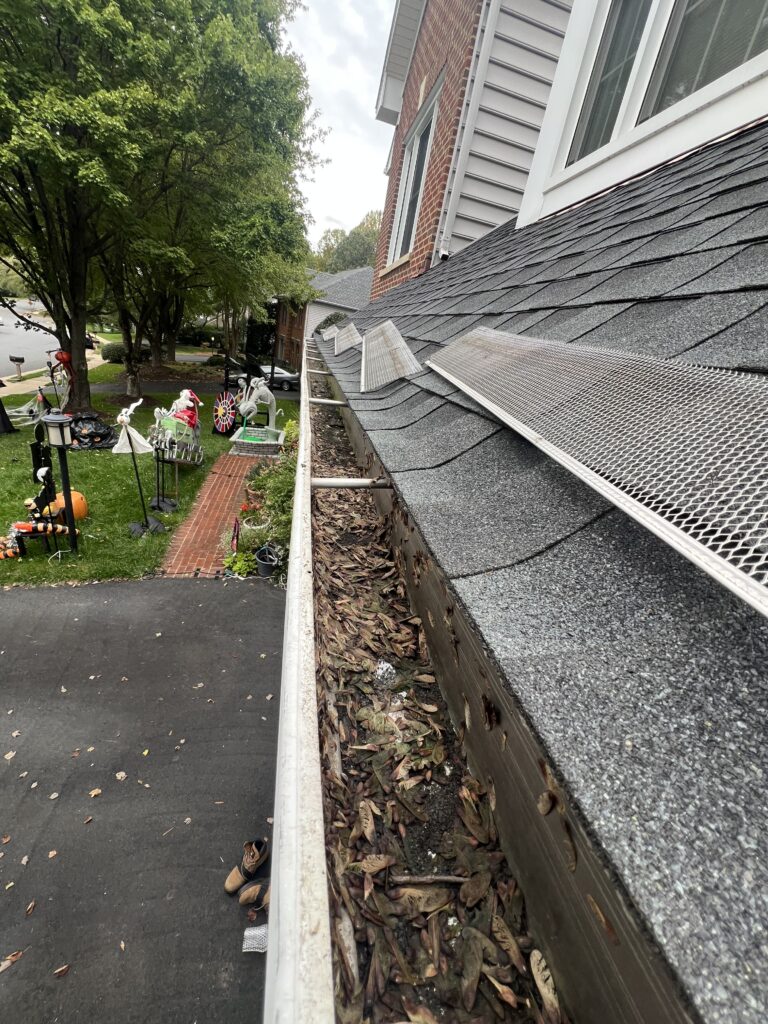
Clogs are the most familiar cause, but they are not always obvious. Leaves may collect at a downspout opening, while pine needles, shingle grit, seed pods, and small twigs create a dense layer across the gutter bottom. Water can flow over that material during light rain, then back up quickly in a heavier storm.
A downspout can also be blocked below the gutter line. If water pools at one end of the run or spills near a downspout, the obstruction may be inside the elbow, vertical pipe, or underground drain connection. Cleaning only the top of the gutter may not solve the problem.
Gutters that are too small for the roof area
Not every overflow problem is a maintenance issue. A large or steep roof sheds water quickly, particularly when several roof planes direct runoff into the same valley or gutter section. Standard gutters may be adequate for one roof layout but undersized for another.
This is common around inside corners and valleys, where a concentrated sheet of water hits one short stretch of gutter. If the gutter is clean and level but water still jumps over during strong rain, a larger gutter, additional downspout, or redesigned drainage layout may be the right fix. Adding guards alone will not increase water capacity.
Improper slope, loose fasteners, or sagging sections
Gutters need a slight slope toward each downspout. Too little slope allows standing water and debris buildup. Too much slope can leave the opposite end too high to catch water properly. From the ground, these problems may appear as a gutter that looks wavy, pulls away from the fascia, or holds water long after rain has ended.
Loose hangers, rotted fascia boards, and storm damage can change the gutter pitch over time. The added weight of wet debris and standing water makes the sag worse. In some cases, water then pours over the back of the gutter, where it can reach the soffit, fascia, and siding instead of draining away from the home.
Water overshooting the gutter
Sometimes the gutter is clear, but roof runoff moves too fast to be captured. Water may shoot over the front edge where the lower roof has a steep pitch, where shingles extend too far, or where a roof valley directs a heavy stream toward one point. This problem is especially noticeable in a hard storm with wind.
The repair depends on the cause. A professional may adjust the gutter position, install a wider profile, add a valley splash guard, or correct an edge detail that is directing water past the gutter. Simply raising the gutter without checking roof drainage can create a new issue elsewhere.
Too few or poorly placed downspouts
A clean gutter still needs enough exits for the volume of water it collects. Long gutter runs with one downspout can become overwhelmed, especially if the roof area above them is large. Downspouts placed where runoff naturally concentrates are more effective than those added only for appearance.
Discharge matters, too. A downspout that empties next to the foundation can leave the home vulnerable even if the gutter no longer overflows. Extensions, properly designed underground drainage, and grading that moves water away from the house all help protect the foundation and landscaping.
What Gutter Overflow Can Damage
Overflowing water does not always cause immediate visible damage. It can soak the edge of the roof, stain siding, loosen trim paint, and erode mulch over time. On homes with basement or crawlspace moisture concerns, repeated water near the foundation can make an existing drainage issue worse.
Watch for these signs after a storm:
- Water streaks or dirt lines on the outside of the gutter
- Drips coming from behind the gutter or from the soffit
- Peeling paint, soft wood, or gaps near fascia and trim
- Washed-out landscaping, puddling, or soil pulling away near the foundation
- Water marks on interior ceilings near exterior walls or roof edges
Interior staining does not automatically mean gutters are the only source of a leak. Damaged shingles, flashing, siding details, and roof penetrations can also let water in. That is why a careful exterior inspection is more useful than guessing from one symptom.
How to Find the Cause Safely
Do not climb onto a wet roof or lean a ladder against a loose gutter during a storm. Start with a visual check from the ground once conditions are safe. Note where overflow occurs. Does it happen at a valley, at the middle of a long run, or beside a downspout? Does water spill over the front, the back, or both?
After the weather clears, look for packed debris and standing water. A garden hose can help reveal slow drainage, but use it only when the gutter is accessible from a stable ladder and conditions are dry. If the downspout does not clear, disconnecting the lower section may show whether the blockage is near the bottom or farther up the system.
Homeowners can handle routine cleaning when they have safe access and the gutters are in sound condition. Call a qualified exterior contractor when gutters are pulling away, the fascia appears damaged, the overflow occurs around roof valleys, or roof work may be part of the solution. Those situations require more than cleaning and can be easy to misdiagnose from a ladder.
Repairs That Match the Problem
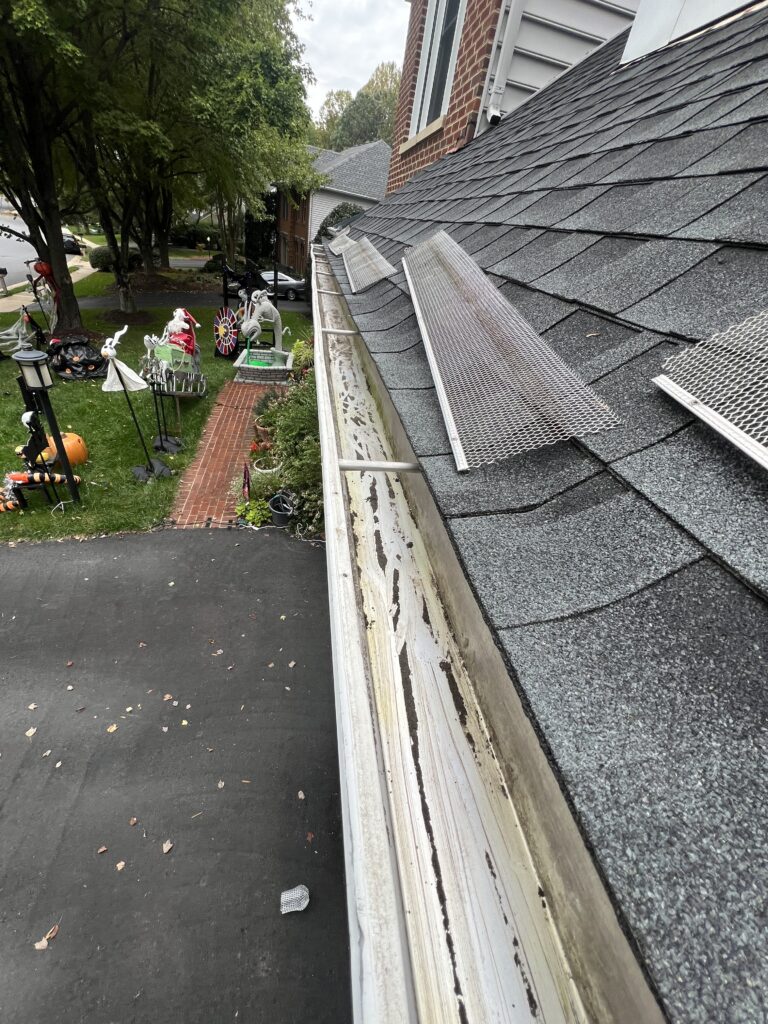
The best repair is based on the cause, not on a one-size-fits-all product. Cleaning and flushing the system is often enough when debris is the only issue. If clogs return every season, gutter guards may reduce maintenance, but quality and fit matter. Some guards can collect debris on top, and no guard removes the need for occasional inspection.
For sagging gutters, the repair may involve new hangers, corrected slope, and replacement of damaged fascia. If sections are bent, rusted, or improperly sized, replacement can provide a more reliable result than repeated patching. Wider gutters and larger downspouts are often worthwhile where roof area and rainfall volume demand more capacity.
A professional should also look at the roof edge. Drip edge, shingle condition, valley flow, and flashing details affect how water enters the gutter. Addressing only the trough while ignoring the roof transition can leave the overflow problem in place.
Preventing Overflow Before the Next Storm
In Northern Virginia, spring pollen, summer storms, fall leaves, and winter debris each put pressure on a gutter system. A practical maintenance schedule is usually more effective than waiting for water to spill. Check gutters in spring and late fall, then inspect them after major windstorms or when you notice overflow.
Keep nearby branches trimmed back from the roof where possible. Make sure downspout extensions remain connected and point water away from the home. If you are planning a roof replacement, siding project, or gutter replacement, consider the full drainage path at the same time. Coordinating those exterior details helps avoid rework and gives the home better protection where roof, trim, and gutters meet.
When heavy rain repeatedly sends water over your gutters, a clear inspection can replace uncertainty with a practical repair plan. Fitco LLC can evaluate the drainage system alongside the roof and exterior details, explain what is causing the problem, and recommend work built to protect your home for the storms ahead.