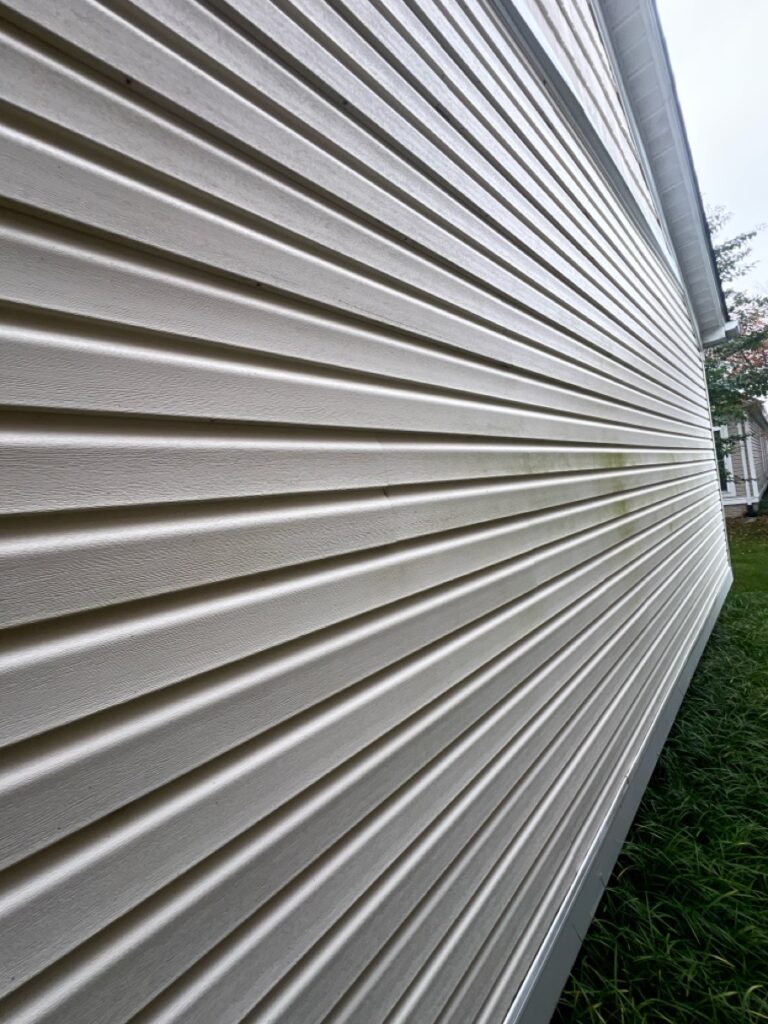
A green film on shaded siding or a streak beneath a gutter can make an otherwise well-kept home look neglected. The good news is that vinyl siding usually cleans up well. The catch is that a pressure washer can force water behind panels, scar the surface, or damage trim when used carelessly. To power wash vinyl siding safely, the goal is controlled cleaning, not maximum pressure.
For many Northern Virginia homes, a gentle wash once a year or as needed after a damp season helps protect curb appeal and removes mildew, pollen, dirt, and algae before buildup becomes harder to manage. A careful setup also lets you spot loose siding, cracked caulk, failing gutters, and moisture-related concerns that deserve repair.
Inspect the Siding Before You Start
Walk around the house before bringing out the washer. Look for loose or warped panels, open seams, missing pieces, cracked trim, peeling caulk around windows and doors, and damaged soffit or fascia. Vinyl siding is designed to shed water, but it is not designed to have water driven upward behind it.
If panels are loose, brittle, or already separated at the seams, hold off on washing until they are secured. The same goes for damaged window seals, exposed electrical components, or a gutter that is overflowing onto the wall. Cleaning can reveal a problem, but it should not make one worse.
Pay attention to what is causing the stains. Light dirt and pollen are normal. Green algae often develops where trees limit sunlight or where gutters spill water near the foundation. Black spotting may be mildew, but persistent discoloration near a roofline or window can also point to a drainage or flashing issue. If the staining returns quickly, cleaning alone may not be the long-term answer.
Use Low Pressure and the Right Equipment
Vinyl siding does not need the force used for concrete driveways. In most cases, low pressure combined with a siding-safe cleaning solution does the better job. A pressure setting in the lower range, often around 1,300 to 1,600 PSI or less, is generally appropriate when paired with a wide spray pattern and proper distance. Some homes can be cleaned even more gently with a soft-wash approach.
Start with a 25- or 40-degree nozzle. Never use a zero-degree tip on vinyl siding. Its concentrated stream can cut, gouge, or leave visible marks in the panel surface. Keep the nozzle moving and test your settings in an inconspicuous area first.
Stand several feet from the siding, then move closer only if necessary. The right distance depends on the machine, nozzle, buildup, and condition of the siding, but closer is rarely better. If dirt is not lifting, change your cleaner or let it dwell a little longer rather than turning up pressure.
Avoid ladders whenever possible. The recoil from a pressure washer can make ladder work unstable, and a long wand or extension attachment is typically a safer way to reach higher sections. For tall homes, steep grades, difficult access, or heavy buildup, a professional crew is the safer choice.
Prepare the House and the Work Area
A little preparation prevents most avoidable damage. Close and lock all windows and exterior doors. Make sure storm windows are secure, and check that window screens are not loose or torn. Cover or avoid direct spray around exterior outlets, light fixtures, doorbells, cameras, and HVAC equipment.
Move patio furniture, grills, planters, and decorative items away from the walls. Cover delicate plants with breathable material or rinse them thoroughly with fresh water before and after using any cleaning solution. Do not trap plants under plastic in direct sun, since heat can damage leaves quickly.
If your siding has oxidation – a chalky, faded residue common on older panels – be especially cautious. High pressure can create uneven clean spots that stand out from the surrounding siding. Test a small area, use a mild cleaner, and consider professional guidance if the finish looks heavily weathered.
How to Power Wash Vinyl Siding Safely
Work in manageable sections, preferably on a mild, overcast day. Direct summer sun can dry cleaning solution too quickly and leave streaks. Windy conditions can also send overspray where it does not belong.
Begin by wetting a small section of siding. Apply a vinyl-safe cleaner according to its label directions, allowing it to loosen grime without drying on the surface. Never mix cleaners, and do not assume a stronger chemical will produce a better result. Bleach-based products can harm landscaping, affect nearby surfaces, and require careful dilution and rinsing. A manufacturer-approved siding cleaner is usually the more dependable choice.
When rinsing, aim the spray downward or straight at the wall, never upward beneath the lap joints. Start near the bottom and rinse upward enough to prevent dirty runoff from streaking dry panels, then finish with a thorough top-to-bottom rinse. Keep the spray at a slight angle and maintain a consistent distance.
Do not linger at panel seams, corners, window trim, vents, or siding edges. Those areas are more vulnerable to water intrusion. Be equally careful around roof-to-wall intersections, electrical meters, dryer vents, and outdoor fixtures.
A good working rhythm is simple: apply cleaner to one small area, gently agitate stubborn spots with a soft brush if needed, rinse fully, and move on. Brushing is often safer and more effective than adding pressure, especially on textured siding or shaded walls with algae buildup.
Mistakes That Can Damage Vinyl Siding
The most common mistake is spraying upward. Water can travel behind the siding and reach sheathing, insulation, or framing. That trapped moisture may not be visible right away, but it can contribute to staining, rot, or mold over time.
Another problem is using excessive pressure to remove stubborn marks. Vinyl can crack in cold weather, warp from heat, or become brittle with age. High pressure may also strip surface oxidation unevenly, leaving a patchy appearance that cleaning cannot correct.
Homeowners should also avoid washing during freezing conditions or when temperatures are close to freezing. Water can enter small gaps and freeze, placing stress on panels and trim. On hot days, avoid spraying very cold water onto sun-heated siding for long periods, particularly on darker colors.
Finally, do not treat every stain as a cleaning issue. Rust streaks, repeated algae growth, water marks beneath gutters, and stains near rooflines often signal a repair or drainage concern. Cleaning the wall without addressing the source means the problem will likely return.
When a Professional Inspection Makes Sense
A professional exterior cleaning service can be worthwhile when siding is high, heavily stained, aging, or close to landscaping and exterior features that need careful protection. It is also a practical time to have the exterior checked for damage that routine cleaning may uncover.
At Fitco LLC, careful siding power washing can be paired with an honest look at the condition of the siding, trim, gutters, and nearby roofline. If there is no repair concern, homeowners deserve to hear that clearly. If a loose panel, failed caulk joint, or drainage issue needs attention, addressing it early can help protect the home from a larger moisture problem.
Clean siding should make you feel confident about your home, not worried about what may be hiding behind it. Use gentle pressure, keep water moving in the right direction, and treat recurring stains as a reason to look beyond the surface.
ko